Showing posts with label sermon. Show all posts

March 31, 2010

Why Obey?

Why Obey?

A sermon preached at First Presbyterian Church, Burbank (March 7, 2010), and the Chicago Presbytery (March 22, 2010)

2 Peter 3:8-15a
8But do not forget this one thing, dear friends: With the Lord a day is like a thousand years, and a thousand years are like a day. 9The Lord is not slow in keeping his promise, as some understand slowness. He is patient with you, not wanting anyone to perish, but everyone to come to repentance.

10But the day of the Lord will come like a thief. The heavens will disappear with a roar; the elements will be destroyed by fire, and the earth and everything in it will be laid bare.

11Since everything will be destroyed in this way, what kind of people ought you to be? You ought to live holy and godly lives 12as you look forward to the day of God and speed its coming. That day will bring about the destruction of the heavens by fire, and the elements will melt in the heat. 13But in keeping with his promise we are looking forward to a new heaven and a new earth, the home of righteousness.

14So then, dear friends, since you are looking forward to this, make every effort to be found spotless, blameless and at peace with him. 15Bear in mind that our Lord's patience means salvation.


The summer before I started high school, my parents made me get a job. This was not in my plan for the summer. As a typical teenager, steeped in the art of persuasion, I tried everything I could think of to talk them out of it (you know, arguments like: “But I have the rest of my LIFE to work!”). No matter what I tried, they remained firm in their decision. After my eighth grade graduation, I soon found myself at a nearby resort every Saturday morning, cleaning cabins. I hated this. I hated getting up early, I hated cleaning up other peoples’ messes (especially at an age where cleaning my own room seemed to be a monumental task). Most of all, I hated being forced to do a job that I didn’t want to do.


Only one thing kept me going: The resort owners came around regularly to check my work. I worked so that I wouldn’t get caught not working. I didn’t want to get in trouble. Needless to say, I worked with a grudge in my heart and a scowl on my face.

Do you ever feel like the living the Christian life is a job you don’t want to do? Obedience can feel like quite a chore, and at times following Jesus feels more like drudgery than joy. The commands of Scripture to love our enemies, to give generously, to serve the poor among us, to care for one another, and to walk faithfully with our Lord are meant for our good, but sometimes they feel like just the opposite. Why should we obey when we don’t feel like it?

Our passage today from 2 Peter speaks to the issue of obedience. The passage begins with the author writing about what to expect at the end of the world, referred to here as the “day of the Lord.” The day of the Lord is a time when God will return to bring about a “new heaven and a new earth, where righteousness dwells” according to verse 13. The old earth will pass away, and there will be no more pain or sorrow. Instead of creation’s ongoing struggle, there will be peace. Righteousness will dwell on the earth.

Some of you may be wondering what others in the early church wondered: “Well, where is this day? Why hasn’t the Lord come back? And why should we bother obeying when God will fix everything in the day of the Lord, anyway?” This question becomes even more pressing when we see injustice or experience suffering. The recent earthquake crises in Haiti and Chile are just one tragic example. Closer to home, we may know friends or family members struggling with chronic illnesses, loneliness or financial ruin. We may be in the midst of a time of great suffering ourselves. With all that’s wrong with the world, what’s God waiting for? God promises us this new heaven and new earth, so why hasn’t God come back already?

But let’s wait just a second. This time will indeed be a time of great celebration, but we also know from today’s passage that the day of the Lord will be a time of adjudication as well. 2 Peter verse 10 ends by saying that “the earth and everything done on it will be found out.” Yikes! Now maybe we might feel a bit more hesitant about wanting this day to come. Everything that is done will be found out. In another translation, this verse reads “Everything done on the earth will be disclosed.”

A logical move to make here would be to say, “Well, we’d certainly better behave, because Jesus is coming back, and he knows what we’re up to!” And in a sense, this is true. Not in the Jesus-is-out-to-get-us sense, but in the sense that God is always present with us, and knows our hearts, our minds, and our actions. Scripture tells us that we will face our creator someday. And this should give us pause when we are tempted to live lives of purposeful disobedience, taking no notice of God’s Word to us. God is real, Jesus is coming back, and we are called to live our lives in light of this truth. So yes, this is one reason to obey. The Lord does know our hearts and see our actions, and according to 2 Peter, upon Christ’s return, everything will be found out.

Yet, praise be to God, this is not the full message of the good news or this passage. For the gospel is genuinely GOOD news, not just warning that God is watching our every move like some sort of temperamental cosmic babysitter, waiting for us to mess up. We do not serve a God who desires the same begrudging obedience I gave when I cleaned those cabins. Living in obedience because we’re afraid of judgment can be a bitter and resentful way to live, and it is not the way to abundant life that Christ proclaims to us in Scripture. Wisely, Scripture gives us other, more important and joyful reasons to live in obedience in light of the Lord’s day to come.

First, we are to live in obedience because the Lord, in his infinite grace and love, is waiting for us to turn to Christ with our lives. The start of 2 Peter 3, verse 9 reads: “The Lord is not slow in keeping [the Lord’s] promise...Instead the Lord is patient with you…wanting all people to come to repentance.”

Most of us aren’t naturally very patient. We’ve probably all been in a situation recently where someone has pushed us to the brink of our patience. Spouses can be good at doing this. I don’t have any children, but I’ve heard that they are great at this. Someone gets under our skin and just pushes and pushes and pushes, until finally… we snap. We say something we shouldn’t, we storm from the room, or we internalize our anger and let it eat away at us. This is a very human response to being pushed. Yet, God does not snap. God does not act out of momentary spite. Unlike the popular children’s book about crazy hippos, God does not ever “go berserk.” God is patient, even when we haven’t earned this patience. Even when we live lives of willful disobedience.
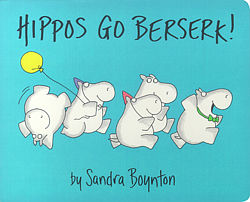


Why is God patient with us? The answer is here, at the end of verse 9: “…the Lord is patient with you, not wanting anyone to perish, but everyone to come to repentance.” God is patient because he wants us all to turn to Christ. God waits so that all people have a chance to turn from the darkness to the light. Think of all those who have not heard the good news of the Gospel. God, in love, is waiting for them. Think of times in your life (maybe you’re in one right now), when you wandered away from living in faith and obedience. When we wander away and allow ourselves to be drawn in by wealth or power, fame or familiarity, idolatry, safety, or selfishness, the Lord is waiting for us. God wants to take away the bondage of our sin and the pain that it inevitably causes ourselves and those around us. Verse 15 puts it this way: “Our Lord’s patience means salvation.”

Therefore, in its most life-giving form, our obedience is our loving response to a loving God who wants to save us, care for us, and heal us. As further evidence of God’s love, in verse 13 God promises a “new heaven and a new earth.” Not only can we be free from sin’s bondage when we turn or return to the Lord in repentance, but one day we will no longer be surrounded with sin’s devastating effects. We will be part of the new heaven and the new earth, where righteousness dwells. The reason for obedience is that when we obey, we are serving a good, merciful, loving God who offers us freedom, grace, and healing in Christ.

Secondly, we are to obey because our obedience is for our good. Verse 14 instructs us to “make every effort to be spotless, blameless, and at peace with God.” Why? Not only because it brings God glory but because it brings us life. This is vitally important to understand: the Lord calls us to obedience not just for God’s glory but also for our good. God is not a cruel master, asking for obedience to a host of random manipulative tasks. The lives Christ calls us to live—lives of obedient sacrifice, discipleship, justice, holiness, and love—are lives that bring life and wholeness to us and to those around us.

Put another way, lives of disobedience turn us into prisoners. Earlier in 2 Peter the author reminds us that people are “slaves to whatever has mastered them.” In Octavia Butler’s novel The Parable of the Talents, Butler writes of a future world where crime is rampant and the government has become utterly corrupt. One of Butler’s characters, Len, loses her mother to an addiction when Len is only a teenager. This addiction isn’t to drugs or alcohol, but rather to a virtual reality room where she can be anywhere she wants. In a broken world, Len’s mother spends her days in virtual Paris or the virtual Bahamas, relating to virtual friends. When Len enters the room to talk to her mother, she is berated for interrupting her mother’s ongoing fantasy. What started out as an enjoyable activity has actually become a trap. Len’s mother has become a slave to her virtual world, and cannot escape it. Her own desire for escape has mastered her and turned her into a prisoner.

This caution from 2 Peter continues to be a prophetic one for us today. Human beings continue to be “slaves to whatever has mastered them.” What turns you into a prisoner instead of a free disciple of Christ? You know the hurdles for your own obedience (and we all have them!). Though living in slavery to sin may be fun for a moment or a season, but will ultimately bring despair. Something that seems fun or rebellious or life-giving for a season ultimately brings despair. Christ came to set us free from this bondage. Thus, we are to live lives of obedience because this obedience helps us walk in the life-giving freedom of the Gospel not only today—right now!—but also tomorrow, next month, and next year, in all its joy and peace.

“But wait,” you may ask. “I do my best to follow Jesus. I make mistakes sometimes, but with God’s help, I always get back up. But my life is hard. I’ve served God faithfully, but my family can’t make ends meet. Sometimes people at work make fun of me for being a Christian. My mom was just diagnosed with cancer. You say that obedience brings life and peace, but it doesn’t feel like it to me. Not right now. My obedience isn’t life-giving. It’s exhausting.”

Friends, this is where the message of the good news about life-giving obedience intersects with the cross of Christ. It’s easy to sell life and peace—any self-help book or spiritual guru can do that. Yet Christianity is about the resurrection and the cross. Death and life. It would be dishonest not to admit that sometimes obedience feels nothing like joy or peace. Sometimes it feels like utter exhaustion, or frustration, or even suffering. In these moments we must not forget where our own Lord’s obedience led him. Christ was obedient even unto death.


Even so, his death was not the end. Christ’s crucifixion, his obedient death on the cross changed everything, for our God is so big that even death cannot contain him. Christ’s death and resurrection changed the world. We do not serve only a crucified Lord—we serve a risen one. Our God has conquered sin and sin’s ultimate end: death. For this reason we have both a present and a future hope.

Our obedience is life-giving both because it helps to unbind us from sin’s entanglements and because it allows us to know our Lord more intimately, to follow him more closely, and to begin to be transformed into his likeness. Please don’t get me wrong—our obedience to God is not what saves us. Only Christ’s work can do that. But through our obedience—by following after Jesus even when it is hard, we begin to know Christ. In Philippians 3, the apostle Paul puts it this way: “I want to know Christ—yes, to know the power of his resurrection and participation in his sufferings, becoming like him in his death, and so, somehow, to attain the resurrection from the dead.” When we are suffering, we aren’t alone. Christ has suffered on our behalf, and Christ suffers with us in our pain even now.

Indeed, we are invited to encounter the hope of the cross and resurrection in the big sufferings of life and in the daily, common struggle to just get through the day. Not everyday was the day of crucifixion for Jesus in his ministry. Some days, we can only imagine, involved walking from one town to the next town with nothing but the heat, hunger, and the disciples’ innocent, but perhaps annoying questions to keep him company. We follow after Jesus’ obedience in those common moments as well. And as we journey with him we are invited to slowly learn that obedience to him is not about fear that he is looking down on us; it’s about the intimacy of knowing he’s next to us on the journey. This is the intimacy of getting to know him in our daily lives whatever challenge—big or small—may come our way.

While I was cleaning those cabins back in high school I worked because I was afraid of “the day of the Lord” in the form of the “checking in of the owners.” To draw the parallel to our Christian lives, I was being obedient so I wouldn’t get in trouble, and this made my work full of resentment. But what I didn’t tell you earlier was that I didn’t clean those cabins alone. The resort owners’ daughter, Jessie, cleaned them with me. While I begrudgingly scrubbed bathtubs at a snail’s pace, Jessie worked diligently and professionally. I would often quickly proclaim an area of the cabin “good enough” and she would return to carefully double-check each room for any oversights. I thought she was crazy to, but as the summer wore on, she shared with me the reasons behind her diligence.

While I was working just so that I wouldn’t get caught not working, Jessie worked hard because she loved her parents—the owners. She also knew that her obedience worked in her favor. The money she made cleaning those cabins paid for her skating lessons and her soccer uniform. The rental revenue her parents received from the cabins eventually helped send her to college. She worked hard because she knew her parents had her good in mind. While I worked solely out of obligation, Jessie worked with love.

A funny thing happened that summer. Jessie’s diligence started to change my perspective. I began to realize that my bad attitude was actually making the work harder. I eventually joined her and began to work industriously too. And do you know what? The work—though those cabins were exactly the same—got easier. The cabins were cleaned much more quickly when I wasn’t dragging my feet every step of the way, and when we got done early, we often had time to go swimming in the nearby lake, washing away all of the sweat and Windex from our labors.

Just as Jessie taught me, our lives of obedience can teach our friends and families what it means to serve God in love. And this can change their lives, as they turn to the Lord themselves and live out the repentance and holiness 2 Peter talks about.

But remember: living a holy life isn’t merely to be an example for those around us or because God says so. When we follow after Christ, a miraculous thing happens. We find peace with God and within ourselves because we are no longer slaves to sin. We begin to know Christ and to have fellowship with him and with one another. And even when our lives are difficult, we remember that the “day of the Lord” is coming, that Christ suffers with us, and that our present sufferings are “not even worth comparing with the glory that will be revealed in us.”[1]

So as you go out to your community, your job, your family, your home today, remember the message of 2 Peter to you and God’s promises of freedom that come with obedience to Christ. This week, and every week, “make every effort to be found spotless, blameless, and at peace with God” (v.14) by God’s abundant grace and the ongoing work of the Holy Spirit. Amen.

[1] Romans 8:18.

July 10, 2008

Cutest Niece and First Sermon


I was so busy with my dentist rant that I forgot the most important family event that has occurred in who knows how long...

My sister had her baby! Alethea was born during the last week of June, and she is healthy and happy and incredibly cute. Some pics from my short (but sweet!) visit to see her in Minneapolis:


Caitie and me and baby (and burping cloth... mmm...).


I love that she looks like a little koala bear here, all round eyes and cute little face and tiny hands...


Cait, Allie, and me.

Baby, mom, and dad are all doing well. My brave sister even had the baby sans epidural... Don't know if I'll follow in her footsteps on that one, but I sure am proud of her!

I never used to understand why people showed baby pictures to everyone they knew... I thought all babies kind of looked the same. But not this one! This one is the world's cutest baby. And I promise I am not biased. At all. ;)

Also, the online link to my sermon isn't really working, so here's the audio file, for anyone who is interested... If it doesn't work for you, let me know and I can email it out.

file:///Users/courtney/Desktop/Sermon_%20Courtney%20-%20Do%20Not%20Fear.mp3

June 23, 2008

"Do Not Fear" - My First Sermon

Do Not Fear
Matthew 10:24-33

A sermon delivered by Courtney Ellis at the First Presbyterian Church of Burbank
June 22, 2008

The year was 1945. World War II was rapidly drawing to a close, but still thousands upon thousands of Jews and dissenters against the Third Reich languished in concentration camps. In one of the smaller camps, Flossenbürg, a young German pastor and theologian awaited the end of the war. He had been thrown in prison both for his participation in
the plot to kill Hitler and for his Christian teachings. He refused to give allegiance to the Nazi regime, and proclaimed only allegiance to Christ. But the war seemed to be at an end. The pastor felt a small glimmer of hope. It was possible that he would be released.

However, that glimmer of hope would go tragically unrealized. On April 9, 1945, Dietrich Bonhoeffer, beloved Lutheran pastor and theologian was hanged. On April 23, 1945, Flossenbürg Concentration Camp was liberated, and the remaining prisoners were set free. Bonhoeffer had missed freedom—and life—by a mere two weeks.

The world’s loss of such a brilliant and sensitive theologian, a man who loved life so much, is tragic indeed. He was a profound writer, and there is no telling what he could have accomplished, not to mention how unthinkable it was for his family, friends, and fiancée to lose him at such a young age.

At the same time, Bonhoeffer was willing to die for Christ. One of his biographers, Renate Wind, published a poem that Bonhoeffer wrote to his mother and his fiancée, weeks before he died. One of its central stanzas goes like this:

Should it be ours to drain the cup of grieving
even to the dregs of pain, at thy command
we will not falter, thankfully receiving
all that is given by thy loving hand.

Do not fear. These are the words of Jesus to his disciples in Matthew 10. These are the words of Jesus to us today. These were the words of Jesus to Dietrich Bonhoeffer, murdered by the Nazis. Do not fear. It was a phrase that Bonhoeffer knew well. He often thought about his own death—during Nazi Germany death was ever present, and standing up for Christ and the Jews meant that death was not only possible but likely.

Yet Bonhoeffer stood firm. He would not sacrifice his commitment to Christ in order to appease an evil empire. Bonhoeffer was unafraid, writing that the death of a believer in Christ “is really only the gateway to the perfect love of God.” Do not fear.

This command of Jesus was given to his disciples in these verses three times between verse 26 and verse 31. In Jesus’ time, when someone emphasized the same idea over and over again, it was like underlining it and giving it an exclamation point. Do not fear. Do not fear. Do not fear.

We need to hear this, don’t we? We are a very fearful people. But what exactly is Christ telling us not to fear? This passage is specific. Though the word used is “them,” and if we read above we realize that we are not to fear those who persecute Christians. We are not to fear the powers that actively work against God’s kingdom. Bible commentator William Barclay puts it this way: “There must be a certain courageous fearlessness in the King’s messenger which marks him [or her] out from other people.”

Christ calls us to follow him in fearlessness. This fearlessness is not of our own making, it is ours because Christ has already triumphed over the world. If we are in Christ, the Bible tells us, we are “a new creation. The old has gone and the new has come.” The old creation still lives in sin, it is fearful indeed. The new creation is not fearful of the world, for the world cannot harm it. As both the Psalmist and the author of Hebrews says in Scripture, “The Lord is my helper; I will not be afraid. What can human beings do to me?” (Psalm 118:6, Hebrews 13:6) People can do nothing! God reigns over all and in all.

But wait—you may be asking—what about Bonhoeffer? Where was God then? It certainly seems as if the Nazis had their way with him, doesn’t it? Let’s begin to answer this question by looking back at verse 26: “So have no fear of them, for nothing is covered that will not be revealed, or hidden that will not be known.”

We live in a world that can be scheming, underhanded, and deceitful. But here the Lord tells us that the truth will always triumph. Fearlessness is always coupled with hope and faith in the coming victory of God. In this verse God cautions us against fearing for our reputations. The fear of what people will think is one reason people hesitate to speak up for Christ.

The Nazis began by attacking Bonhoeffer’s reputation. He was not a nationalist (an accusation that meant certain persecution in Nazi Germany), he did not support Hitler. Bonhoeffer stood firm. He loved Christ more than he loved his reputation. Like Christ, when they hurled insults at him, Bonhoeffer did not return violence with violence. Today Bonhoeffer is an incredibly respected figure, among Christians and non-Christians alike, because he proclaimed the truth—that the Nazi regime was evil. Though his reputation was attacked, the truth won out in the end, even after his death.

Now, none of us have to stand up against Nazi Germany. And few of us will be faced with the incredibly blatant evil that Bonhoeffer was faced with. Yet, we still face fear of more minor persecution in our daily lives. When I attended graduate school for English, there were many occasions where my fellow students openly ridiculed the name of Christ. To my great detriment, I stayed silent. I was quite vocal about my belief in Christ at church and with my friends, but I was terrified of what might happen to my reputation if the people at my school found out I believed in Jesus. My fellow students were not the Nazis, of course—far from it. Most of them were just ignorant about who Jesus is. Several of them had never even met a Christian before, and assumed that all Christians were the uneducated, judgmental stereotypes we see in the media. Yet, I was still afraid.

As the program went on, I began to feel guiltier for these silences. If I couldn’t be obedient to Christ in such a central thing, how would I be able to serve him in other ways? God was faithful in my rocky road to obedience—opportunities to speak up for Christ continued to come my way.

One day a fellow student asked me flat out—right before class, when many other people were around—if I was a Christian. I was at a crossroads. Many of you have or will see yourselves at a crossroads like this. Sometimes choices seem a bit grey—you could do any number of things and still please God. But sometimes we’re faced with a crossroads—deny Christ, or acknowledge him. Obey him, or reject him. As we read in verses 32-33, “Everyone who acknowledges me before men, I also will acknowledge before my Father who is in heaven, but whoever denies me before men, I also will deny before my Father who is in heaven.” This denial is not always a verbal one, like Peter’s in Matthew 26. We need not say, “I do not know Jesus” to deny him. We can also deny him by our silence, as I had been doing. I had a clear decision to make.

I took a deep breath, and, with God’s help, I said a soft, shaky, “Yes.” The student looked at me for a second, skeptically.

“Huh,” she said. “Interesting. I always thought that Christians were like circus freaks. But you're actually kind of smart..."

It was a small step, but even the smallest step, made in obedience, is progress. God tells us not to fear for our reputations, because the truth will always win out. God is truth. If that one simple acknowledgment of my belief in Christ had ruined my graduate school reputation forever, it shouldn’t have mattered to me. One day the truth—God’s truth—would be made known. The judgments of eternity will correct the judgments of time.

We must note here that speaking the truth is about much more than just being right. Christians have gotten themselves into a great deal of trouble over the centuries when they decide to proclaim rightness. We are called, as Christians, to speak the truth in love—not because we want people to know they are wrong, but because we love them enough to tell them truth. My graduate school friends may never have met another Christian their entire lives. If I had stayed silent, I would not have been loving them. If we really believe that the news of Jesus Christ is the best news, we cannot stay silent.

Secondly, this passage tells us that we need not fear for our safety. In verses 28-29, Jesus says, “Do not fear those who kill the body but cannot kill the soul. Rather fear him who can destroy both soul and body in hell. Are not two sparrows sold for a penny? And not one of them will fall to the ground apart from your Father.”

God doesn’t just notice when a sparrow dies—he holds all things, all creation, all of our daily lives—in his hands. Down to the tiniest molecule, nothing in creation happens that God isn’t aware of. It is also possible that the word translated “fall” here is a translation of the Aramaic word for “light upon.” In other words, God doesn’t just notice every time a sparrow falls, he notices every time a sparrow lights upon a tree branch or hops upon the ground. Nothing goes unnoticed—down to the tiniest sparrow. And if God is watching over the sparrows, how much more will he watch over his children!

Bonhoeffer knew this—even through the very end of his life, faced with torture and execution, he knew that his life was in the hands of the living God. Every moment he could cry out to his creator, for God was with him. Any time he felt anxious or fearful, any time he was tempted to despair, the Lord was beside him in his sufferings.

We live in a world that believes it is powerful. Satan—the one the Bible calls “the prince of this world”—believes that he is powerful. The Nazis believed that they were powerful. But the power of this world, the power of evil, the power of the enemy, this is not real power. Why? Because the worst thing, the very worst thing this world has to throw at us, is death. That’s its greatest weapon; that’s its ultimate threat. Death. And what do we know about death?

Christ has triumphed over death. Romans 8:38 tells us that not even death can separate us from the love of God. In his death and resurrection, Jesus has saved us from death. The Bible tells us that death has no power over us, that it has no sting. As Bonhoeffer wrote, “our death is really only the gateway to the perfect love of God.” The very worst thing the world can throw at us is the very thing that Christ has conquered. We need not fear.

But I’ve glossed over an important section. In this passage Jesus tells us three times not to fear, but he tells us one time that we should fear. “Do not fear those who kill the body but cannot kill the soul. Rather fear him who can destroy both body and soul in hell.” We should fear one thing, and one thing only. We should fear God.

William Barclay tells the story of Hugh Latimer, a Christian bishop in England in the 1500s. Latimer was preaching when King Henry VIII was present. He knew that he was about to say something that would anger the king, and in those days, that could easily get a person killed. So in the pulpit he began speaking to himself, saying:

“Latimer! Latimer! Latimer! Be careful what you say. Henry the king is here.” Then he paused for a moment, prayerfully.

“Latimer! Latimer! Latimer!” he continued. “Be careful what you say. The King of Kings is here.” Latimer knew who his most important audience was. God, the creator of the heavens and the earth. He had a holy fear, a holy respect for God.

Fearing God means understanding that God made us and that at every moment, at every turn, our existence is dependent upon him. Thus, at any moment he could allow our existence to cease. But he doesn’t. Instead he sends Jesus to die so that we may live—in this life and in the one to come. But in this act of love God’s power and immensity is not minimized—we are still called to fear him, to receive his love, and to worship him. With God fear, love, and worship always go together.

Fearing God means understanding that we cannot hide from God’s presence. He is where we are. He sees the depths of our hearts and each thought in our minds. In God’s presence we are fully known and fully loved, and called forth to grow into the people he created us to be.

Fearing God is knowing that Jesus is Lord of all. He is Lord of our lives, of the universe, of our neighbors, of this church. He is all powerful. The fear of God is believing that he is God, and we are not. The fear of God shatters our perception of self-sufficiency. When we begin to know who God is, we begin to realize that we are utterly dependent upon him.

We should fear him because, as C.S. Lewis writes of Aslan—his literary symbol for Jesus—he is not safe. When young children are to meet Aslan for the first time, they are terrified of him. He is a lion, after all, and they are only small children. The lion is golden and shaggy and powerful and fearsome indeed. The youngest of the children asks her caretaker if Aslan is safe. “Of course he isn’t safe,” he replies. “But he is good. He’s the king!”

I was only able to speak up for Jesus when my fear of God, the realization that God is real, that the Good News is real, overcame my fear of my fellow students. I may have brought ridicule upon myself, but if I stayed silent, those students would have missed an opportunity to hear the Good News of Jesus. When we fear people so much, it is because we fear God so little.

This fear of God makes the shallow fear of persecution in this world appear as it really is. Even so, when we fear the ridicule of this world, God is with us, reminding us of his victory over the forces that work against him. His presence helps to teach us that we have nothing to fear in this world. Perhaps Dietrich Bonhoeffer put it best in a sermon he wrote in 1935, a decade before he would be asked to give his life for the kingdom of God. The sermon was called “Learning to Die.”

“Fear God—instead of the many things which you fear. Do not fear the coming day, do not fear other people, do not fear power and might, even if they are able to deprive you of property and life; do not fear the great ones of this world; do not even fear yourselves; do not fear sin. All this fear will be the death of you. You are free from all this fear; it isn’t there for you. But fear God and God alone; for God has power over the powers of this world; the whole world must fear God—God has power to give us life or to destroy us; everything else is a game—only God is in earnest, entirely in earnest. Fear God’s earnestness—and give God the glory.”

Amen.


The link to the sermon's audio is below, but it won't be posted for a couple of weeks or so.

First Presbyterian Podcasts

June 18, 2008

First Pres. Burbank Info

For any of you who are far from southern California, but interested in the church Daryl and I are serving at, here is the link:

http://www.firstpresburbank.org

You can hear all the Sunday sermons podcasted there, as well. Pastor Ross can preach the LIGHTS out, so if you need a good sermon, check out his from this week!

In other news: I saw my first black widow spider two nights ago. Let me describe it: ICK. At least it was outside on our hill and not in my bedroom...