Showing posts with label worship. Show all posts

July 28, 2010

Money and Jesus: Part 1

"I hate money," proclaims Jo March, heroine of Little Women (and of bookish young girls everywhere).

Her sister is sick, her father is away fighting the Civil War, and her mother needs an expensive train ticket to fetch the doctor. Admirable, spontaneous Jo does what many a Civil War-era heroine did when faced with an expense too great to pay out of pocket: she sells her hair.


This leads to the best line in the whole movie (Little sister Amy, upon seeing the shorn Jo: "But Jo, your one beauty!"), but it is Jo's first proclamation that makes my point today. Oh, money. How difficult you are.

My husband and I have been graduate students, on and off, for the past five years. One of my favorite Wheaton professors was fond of saying, "The nice thing about staying in graduate school is that you get really good at being poor."

This is true. We're almost rocket-scientists when it comes to finding deals (there's a $4 movie theater on the other side of town!) or saving money (cooking without meat 4-5 days a week can save a bundle). We get tips from other grad-school friends and family who are also quite adept (and often even MORE adept) at making ends meet when those ends are quite short to begin with.

We certainly haven't suffered during our graduate school years - family and friends been exceedingly (almost ridiculously) generous and we've budgeted carefully and thoughtfully. We also aren't grumpy about our state of affairs. We love learning and ideas, and this is the path we've chosen for a reason. Investment banking just doesn't have the same siren call, to us!

Still, having less money usually means being inconvenienced. We won't starve, certainly. But we'll wait at the airport three hours for a ride instead of paying for a cab ($60!!!). We'll wait until Monday to go to the Urgent Care clinic with a bad sore throat instead of going to the Emergency Department on a Saturday ($$$$$!!!). We take walks together for dates and get our books from the library. A real splurge is a night at Maggiano's or Outback. Concerts are largely a thing of the past. We stay with friends whenever we can while traveling (which has the added bonus of fun visits on top of staying in our budget).

Our premarital counselors told us that God usually gives every couple one person who is the "gas pedal" and one who is the "brake" when it comes to spending money. This can (obviously) cause some conflict.

I'll admit that I am the gas pedal in our relationship. Yet, my ability to spend money really quickly is not always because I'm generous. Usually it's because I don't handle much of the budgeting, so I don't know what we'll be sacrificing if I splurge on an item. I don't usually want to spend tons of money on myself (though cute clothes can be tempting, to say the least...), but I do want to give it away. I want to buy the BEST wedding gift. I want to put a thousand dollars in the offering plate. I want to buy out Baby Gap for my cute little nieces. When friends come for dinner I want to cook steak, darn it, and not the cheap kind.

Daryl (luckily) is a bit wiser. He is our brake pedal. He's the one who asks if we really need something, or if we just want it. He helps weigh price and convenience against budget and savings. Though sometimes (as he'll readily admit), he can brake too much. We're learning to balance. We're learning to give. We're learning to save. We're learning to be wise.

I've been challenged in my thinking about money this summer. For one thing, I'm staying with my parents up in Wisconsin (read: no rent payments for a few months and lots and lots of meals for which we don't pay). It's an incredible gift. It's amazing. It's restful. And it's given me some space to relax and think about money in a way other than, "Oh goodness, we MUST STICK TO THE BUDGET OR WE WILL HAVE NO SHOES AND NO FOOD!!!"

I don't want my relationship with money to be one of fear. I don't want to hate it, like Jo. I also don't want to love it, as that can obviously lead to all sorts of problems. What I really want is to treat it as another aspect of living life under the power and grace of Jesus. The Lord of the universe is Lord over my wallet, my bank account, and my desire for a new pair of shoes, too.

Some good friends of our family teach at churches and conferences about stewardship. Recently they've started keeping a log of all the ways God has blessed them financially through family, friends, gifts, and surprises. This is admirable, and it's something Daryl and I have started to do. It's so easy in the middle of a financial drain (a crazy vet bill, a dental crown, graduate school) to feel suffocated. How will we make it through this? Now we have something tangible to look at, to see where God has cared for us in the past, and will certainly care for us in the future.

But here's the crazy thing about these friends: Not only do they keep a record of these bountiful gifts; they tithe off of them.

That means if their church sends them on a camping trip that would have costed, oh, $400 for their family of five, they put $40 in the offering plate. If someone were to donate a car worth $5,000, then $500 would go in. This is so incredibly brave and full of faith that it almost scares me to think about, especially coming from a graduate school budget.

I don't think that this is the solution for everyone when learning to be a good steward of what God has given, but it does give me pause.

For this family, tithing is worship. For Daryl and I it is often either blind giving (Daryl does most of our budgeting, so when I'm tempted to be crazily-generous in the offering plate, it's often because I don't count the cost, which isn't really generosity as much as it is randomness) or fearful giving. I want our tithing to be an act of worship. I want to give to God because of what God has bountifully given to us, even if our piggy banks feel light.

*Image borrowed from: http://ingridgraceandaudrey.blogspot.com/2008/09/re-let-it-be-love3.html

March 24, 2010

Abundance

Our God is a God of abundance.

This can be easy to forget. As Daryl and I headed off to seminary three years ago, I remember confiding some of my shallow fears to him during our drive from Chicago to New Jersey.

"I don't want to be shabby," I said (as if that were the worst fate that could befall a 20-something woman). "I know we're going to have to sacrifice a lot, and I know that money will be really tight, but I don't want to look shabby." I had visions of wearing the same handful of t-shirts every day to class and work, of scrounging at thrift stores for a wearable pair of shoes, of graduating from seminary without a single fashionable or well-fitting piece of clothing to wear before my Presbytery for an important meeting.

How quickly our thoughts can go crazy when faced with the prospect of sacrifices--even small ones.

My deepest fears (of course) never came to fruition. Not only do most of my clothes from three years ago still work fine, but friends and family members have been generous with Christmas and birthday gifts to help us through seminary financially. We've had to budget, certainly. We have some student loan debt from our schooling, despite my part-time jobs, but that was to be expected. But God has always provided for us. Sometimes via our home church, sometimes via friends and family, sometimes in surprising ways. In a year full of plane trips, we've each been bumped several times and received free flight vouchers. Through the kindness of friends, we ended up with a free place for Daryl to stay in Nashville and a free car to use for the academic year. Just the other day I opened up an envelope full of crossword puzzles (my grandma cuts them out of the paper and mails them to me - always one of the happy things in my week!), and $20 fluttered out onto the floor. We're reminded almost daily that God has not forgotten us.

I'm held speech conferences last week with the junior seminary students. We watched their video presentations of Scripture and poetry readings and talked about how they've progressed over the semester. Then we discussed their final projects: a reading and retelling of a Scripture passage of their choice. One of the students brought in a passage from John - the wedding at Cana. After she left the conference I found myself riveted to the passage and to all it says about who our God is.


Here is the passage:

 On the third day a wedding took place at Cana in Galilee. Jesus' mother was there, and Jesus and his disciples had also been invited to the wedding. When the wine was gone, Jesus' mother said to him, "They have no more wine."
 "Dear woman, why do you involve me?" Jesus replied, "My time has not yet come."
 His mother said to the servants, "Do whatever he tells you."
 Nearby stood six stone water jars, the kind used by the Jews for ceremonial washing, each holding from twenty to thirty gallons.
 Jesus said to the servants, "Fill the jars with water"; so they filled them to the brim.
 Then he told them, "Now draw some out and take it to the master of the banquet."
   They did so, and the master of the banquet tasted the water that had been turned into wine. He did not realize where it had come from, though the servants who had drawn the water knew. Then he called the bridegroom aside and said, "Everyone brings out the choice wine first and then the cheaper wine after the guests have had too much to drink; but you have saved the best till now."
 This, the first of his miraculous signs, Jesus performed in Cana of Galilee. He thus revealed his glory, and his disciples put their faith in him.

With Easter approaching, it's a great time to think about abundance. Christ doesn't just conquer sin and death on our behalf, he destroys it. He rises from the dead. He brings us new life, not just band-aids for our wounds. He redeems and transforms us, doesn't just help us to behave ourselves.

I love the theme of this passage in John. The wedding is out of wine. Sometimes I'm tempted to view this lack of wine as just a cultural faux pas, and surely God doesn't care about this, right? Why should the God of the universe care about a small wedding that has run out of the beverage of choice? Can't the people just make do without it? Why bother God with such a silly request? But to God, no request is silly. And not only that, God breaks in with the miraculous into the mundane. God does more and better than the people's request. God doesn't give us just enough, so we can squeak by. God breaks in with abundance. Our cups overflow. The wine is not only more than enough for the wedding, but it is the best wine.

We don't always get what we want from God, but we get what we need. And often, we get over and above what we even asked. I was afraid of being shabby in outward appearance during seminary, but during my time here the Lord has spoken to my heart, stretched me in my ministerial gifts, and helped me to mature in my faith. My heart is stronger than it was, and my sense of self more firm. God has given me all of that and a new pair of shoes now and again. The shoes seem silly, but God cares about the sparrows and my need to be presentable and professional has not escaped God either. I have not been forgotten, even in my smallest need. Neither have you. Our God is a God of abundance.

*The "Wedding at Cana" artwork is by Dr. He Qi, seminary professor at Union Seminary of Nanjing, and is found here.

February 27, 2010

Lent and Marriage


When I tell people that Daryl and I are spending the year apart, I get a whole variety of reactions. Most of my female friends are instantly sympathetic.

“Ohhhh… how difficult!” they say. “That must be so hard! How do you manage it?” This is by far the most common reaction. Other reactions have included:

“Well, that must be kind of nice, right? I mean, you can just do whatever you want with your free time then, can't you?” This was from an unmarried male friend, who clearly did not know what he was talking about for two reasons. #1. I can still do whatever I want with my free time when I am living with Daryl. Often what I want to do is spend that time with him. Now that I’m in Jersey and he’s in Tennessee, often I still want to spend that time with him, but can’t. This stinks. #2. It isn’t “kind of nice.” It’s kind of crappy. The thing about being married to someone is that you usually really like them. And want to, you know, live with them. I was at least relieved that this comment came from an unmarried male friend, not a married one...

The skeptic look is my favorite response. The “What? WHY?” face combined with the subtle raised-eyebrow nuance of “Is your marriage okay?” and the skeptical “I’m glad I’m not you!” nod. I'll admit, this would probably be my response if I wasn't the one in this situation. And at points during this year, Daryl and I have both asked ourselves and each other the question: Are we crazy?

This question comes up even more now that we're coming to the apex of this separation. While we expected it to get easier the closer we got to being permanently reunited, it's actually gotten harder. On top of missing each other right now, there's the cumulative effect of missing one another over the past seven months, too. It's exhausting at times. Don't get me wrong, we're making it through okay, but it is hard. And it's been long. And the end will be a welcome sight.

It feels appropriate, somehow, that the most difficult season of our 9-month geographical separation falls during Lent. Lent always catches me a bit off guard. After the wonderful craziness of Christmas and the busy start of a new semester, I always look up mid-February and realize, "Oh my goodness, Ash Wednesday is... tomorrow!" And then I have a few moments of feeling like a bad Christian, which is tempered by the fact that I'm a Presbyterian and we don't really do as much Lent as other traditions. But we do some Lent. And after several years of adding in Lenten practices to my life for a season, I know the difficulty and joy that Lent brings. Discipline is hard. Giving up things is hard. But Jesus always manages to meet me in the midst of this season, and because of that I have grown to love Lent.


This is Central Park last February. Everything is hibernating, asleep, and cold. This is how I feel at the start of Lent (and during much of the Lenten season) every year. It's cold and dreary outside. I'm tired of my classes, weary of my job, cold and worn out and irritable. I am an Easter girl, not a Lenten one.

Yet one of the things I love about Lent is that it's all about human weakness. When we go to church on Ash Wednesday and have ashes smudged on our foreheads we are reminded by the minister, pastor, or priest to "Remember that you are dust, and to dust you shall return." We give up chocolate or alcohol or red meat and this makes us cranky and hungry and we suddenly realize that we are not as in control of our bodies as we would like to believe. Once during a Lenten season when I gave up baked goods (pre-gluten-free days, of course), I remember getting into a totally unnecessary fight with Daryl. This particular fight was all my fault, and after we had gone around in circles arguing for awhile, I finally climbed up into his lap, burst into tears, and exclaimed, "I just need a BROWNIE!!!" Human weakness, indeed

But the purpose of Lent isn't to remember how weak and crappy we are just so that we can properly feel miserable about ourselves. The purpose of Lent is to remind us that we need Jesus. Desperately. Completely. Fully and indescribably. We are dust. He is God. We are broken and small; he is mighty and compassionate.

A Wheaton professor of mine once remarked that the point of fasting during Lent is not to prove to ourselves how good and holy we are. It's to fail in our attempts and realize our utter weakness. We strive to be obedient to the Lord, and yet we are reduced to bundles of cravings after giving up something so small as one meal or one type of food. It's to remind us daily how much we need our Lord in all things, the small as well as the big.

Lent is dark and cold and often lonely. I chafe against the disciplines I am trying to instill in myself daily, the Scripture reading that I often put off until midnight, the Internet surfing I am trying to cut down upon (I haven't given up any food or drink items for Lent this year because I'm still learning how to give up gluten, and that's challenge enough). I am tired and worn and cranky. But Lent helps me remember, despite the busyness of my days and the noisiness of my life, that I am dust.

 
 At the end of this season comes spring. And Easter. Glorious Easter. Where we remember that we are dust, but that we serve a God who created humanity out of the dust, who saves us from our brokenness, and who defeated the powers of sin and suffering that we struggle against each day. Daryl always half-teases me that I am too quick to run to Easter. This is true. I like happy and bright and bubbly and cheerful. I am an Easter girl, not a Lent girl. And because of this, I continue to strive to learn about Lent by walking the road of Lenten discipline. The sadness and stillness of meeting Jesus in Lent helps me be a better chaplain and pastor, a more compassionate minister of the Gospel, and a softer and gentler person. I am an Easter girl, but many people around me are Lenten people, and I have much to learn from them. Christ is risen, but Christ also suffered and died. Both are true. Both are important.

Yet I cannot help but look toward the tiny light at the end of the Lenten tunnel even now. Christ suffered and died, but this is not the end. At the end of this season comes spring. And Easter. And the beginning of daily life with Daryl once again. At long, long last.

Amen and amen.

January 20, 2010

I('ve) See(n) Dead People

I did a hospital chaplaincy internship this summer. Called CPE (Clinical Pastoral Education), this internship is required for many of us who are entering ministry. I dragged my feet quite a bit on the way in (I really don’t like hospitals at all, but as my supervisor soon helpfully pointed out, no one likes hospitals), but it turned out to be a truly incredible experience.  In fact, I enjoyed it so much that I go back to volunteer as the night on-call chaplain when the chaplain’s office is short someone to cover that shift.


Of course, with HIPAA and just plain ol’ pastoral confidentiality, I can’t share any specific details. But I can say that I worked in an ICU and saw a lot of healing, recovery, and joy, as well as a LOT of death, grief, and sadness.

In a modern world where our lives are amazingly sanitized, death often seems very far away. It can even seem downright mysterious. When I got my first on-call page at 3am, my first thought as I groggily sprinted to the Emergency Room was that I might be about to see my first dead body, apart from funerals. What was it going to be like? Would I freak out? Would it just seem normal? Would I say something so accidentally insensitive that I would be kindly asked to leave the program and never become a pastor?!?! I took a deep, deep breath and said a very earnest prayer. “Jesus, help me do this. And help me not to pass out. Or say anything really stupid.” And, praise be, he did.

Anne Lamott, in Traveling Mercies, says that her two most-often used prayers are “Help me, help me, help me” and “Thank you, thank you, thank you.” Nothing made me understand this like CPE. When that pager goes off and there are only minutes to get to the room of a patient, and that patient may be in any state, from death to near-death to just bored and in need of a conversation (this happened much more often than I expected), those prayers fell like my hurried footsteps. “Help me, help me, help me, Jesus.”

Since CPE I’ve found myself thinking more and more about grief, mourning, and death. Not in a morbid or overly-fascinated way. I’m in no hurry to approach it myself, mind you. But CPE has a way of reminding a person how very tenuous life is. It seems like for every person who comes to the hospital with just a broken arm, another person comes in with end-stage cancer or an aneurysm, and never leaves again. Sometimes people come in for something small and find out it's something major. I also didn't really know how ugly and awful the physical reality of death can be. Sure, some people die peacefully in their sleep, but this is something I have yet to see for myself. In the hospital, despite doctors' and nurses' best efforts, death is often messy and unscripted and horrible. It happens at three in the morning or before a loved one arrives or hours after it was predicted, when a family is all but crazed with anticipatory grief.

After my internship this summer, I’ve found myself wanting to cling more closely to Daryl (difficult, as he is hundreds of miles away), to protect him (and the rest of my family and friends) from any possibility of a car accident or a fire or a heart attack.

But I can’t protect my loved ones from these things. No one can. So I’m left to face the scary reality of death and the (perhaps) scarier reality that we am not in control of when death approaches us or the ones we love. This has driven me to greater prayer, but also to greater contemplation of what I believe death to be.

A fellow student in my Theology of Scripture course today said, “You know, death isn’t the worst thing. We treat it like it’s the worst thing, but it isn’t.” So true.

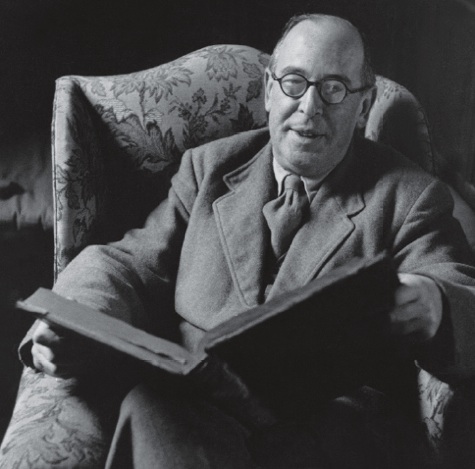
A professor of mine said recently that he has trouble teaching courses on the apostle Paul because Paul is like a pastor to him. Daryl once told me that he didn’t know if he could write his master’s thesis on Bonhoeffer because Bonhoeffer is his pastor. As the winds and waves of seminary have gotten rougher, I’ve realized that I need to return to reading some of my pastors. And perhaps there is no one more familiar and comforting to me than C. S. Lewis.


Two nights ago I finished The Silver Chair. While this used to be my least favorite of the Narnia books (what can I say, I loved horses as a young girl, and they rarely appear in this book…), as I’ve gotten older it’s become one of my favorites. It speaks so beautifully to the utter slog that the Christian life can seem at times. Mired in modernity and confusion, Aslan’s voice can seem very far away, yet we must still follow him.

Anyway, I bring this up because of one of the ending scenes in the book. The book ends with the death of King Caspian. Caspian is one of the longest-running characters in the Narnia series. He appears first in book two (Prince Caspian), sails the world throughout book three (The Voyage of the Dawn Treader), and then appears again in The Silver Chair (I know modern reprintings have changed the order of the series, but I am a die-hard believer in their original order – starting with The Lion, the Witch, and the Wardrobe and ending with The Last Battle). By the time King Caspian is a frail, elderly man, we’ve known him over the span of three books, and grown quite attached to him. He sails home from his final journey to bless his only son, Prince Rillian, and then he dies.

Soon thereafter, the two children of the story—Jill and Eustace—are brought by Aslan to a great mountain. There is a stream on the mountain, and the dead king lies in it with the waters flowing over him. Aslan, Jill, and Eustace stand over him and mourn. The exchange that follows goes like this:

“Son of Adam,” said Aslan, “go into that thicket and pluck the thorn that you will find there and bring it to me.”

Eustace obeyed. The thorn was a foot long and sharp as a rapier.

“Drive it into my paw, Son of Adam,” said Aslan, holding up his right fore-paw and spread out the great pad toward Eustace.

“Must I?” said Eustace.

“Yes,” said Aslan.

Then Eustace set his teeth and drove the thorn into the Lion’s pad. And there came out a great drop of blood, redder than all the redness that you have ever seen or imagined. And it splashed into the stream over the dead body of the King. At the same moment the doleful music stopped. And the dead King began to be changed. His white beard turned to gray, and from gray to yellow, and got shorter and vanished altogether; and his sunken cheeks grew round and fresh, and the wrinkles were smoothed, and his eyes opened, and his eyes and lips both laughed, and suddenly he leaped up and stood before them—a very young man or a boy. Jill couldn’t say which, because of people having no particular ages in Aslan’s country…And he rushed to Aslan and flung his arms as far as they would go around the huge neck; and he gave Aslan the strong kisses of a King, and Aslan gave him the wild kisses of a Lion.

At last Caspian turned to the others. He gave a great laugh of astonished joy.

“Why! Eustace!” he said. “Eustace! So you did reach the end of the world after all…”

Eustace made a step toward him with both hands held out, but then drew back with a startled expression.

“Look here! I say,” he stammered. “It’s all very well. But aren’t you--? I mean didn’t you--?”

“Oh, don’t be such an ass,” said Caspian.

“But,” said Eustace, looking at Aslan. “Hasn’t he—er—died?”

“Yes,” said the Lion in a very quiet voice almost (Jill thought) as if he were laughing. “He has died. Most people have, you now. Even I have. There are very few who haven’t.”

I love Lewis’s reminder that Christ has gone before us, and for this reason, death is simply the pathway to life. Hard to remember, in light of all the suffering around us, but profound nonetheless.

Dr. Davis taught about funerals in this week’s Presbyterian Worship course. He asserted the importance of having some prayers prepared to help us in funeral services. This was a prayer he used as an example, and the prayer I’ll leave you with today:


God,
You have designed this world and know all things good for us.
Give us such faith that, by day and by night, in all times and in all places,
we may without fear entrust those who are dear to us to your never-failing love,
in this life and in the life to come; through Jesus Christ our Lord.
Amen.

January 7, 2010

Worship

I’m currently taking a Presbyterian Worship course taught by Dave Davis, the pastor of Nassau Presbyterian Church. In the first class, he brought up the question (as all good intro courses will) of the subject itself. What is worship?

To help answer this question, he showed this video: Click here.

Watch the whole thing, if you can. It’s just five minutes long. It actually gave me chills by the end. Apparently it’s from a documentary project about music, community, and peace.

Its connections to worship are many. The one I love the best (that actually wasn’t even mentioned in class) is the idea of our worship as joining a song that is already going on. When the first man begins playing and singing, he is alone. But slowly more and more people join the song that he started. In our worship, whether it is private or corporate, we do not begin the song. It is already playing all over the world. Men, women, and children, the whole earth, the angels of heaven, are already singing, and we simply add our voice of praise to theirs. We are not alone in our worship not only because God hears and responds, but because the universe is dedicated to the worship of God.

Dr. Davis made the point that this video helps illustrate worship because we all need one another for worship. We need others to “stand by us” and bolster us in our worship of God, for we are weak and changeable people. “There are some weeks you’ll drag yourself to worship and not even be able to sing,” he said, “but the person next to you will sing for you.”

This reminds me of some wisdom my college roommate Kelsey offered to me back when I was in undergrad. I was only twenty, and I was sitting in our room crying about some boy or other. She found me there, on my bed, and came to sit down next to me.

“What’s going on?” she asked. 

“Oh, nothing,” I said. “God and I have some things to work out.”

“Would you tell me about it?” she asked, kindly. “You don’t have to handle it all by yourself. Sometimes we all need a prayer that is stronger than our own.”

This is one of the great beauties of the Christian life. Yes, we are each individually called to follow the Lord. Yes, our obedience and response to Christ’s call is a personal decision and responsibility. Yet, we simply cannot go it alone. We aren’t designed to. We aren’t built to. And, mercifully, we aren’t required to. The Christian life is by nature a life lived in community. We serve a communal God—three persons within Godself. We serve a God who reaches out to us to be in relationship with us even as we are in relationship with one another. And often, each of us needs a prayer that is stronger or different than our own.

I’m excited about this course on worship, despite being a touch cranky that I am required to take it (I’ve already passed my Worship Ordination Exam, making this course a tad bit redundant). Still, I’m learning that my Presbytery does indeed have my good and the good of the church in mind, and I’m trying to have an open mind and heart during this short course. And, really, if I am going into the pastorate, reinforcing the theology of Presbyterian Worship one more time before I head in for my final review is quite a good idea indeed.

Dr. Davis also said something that made me think twice about those Sundays where I sleep in. I go to a church 45 minutes away, which is quite a drive on a wintry Sunday morning when Daryl is far away in Nashville. Listening to a sermon on the radio is tempting. Sleeping in until 2pm is very tempting. But, as Dr. Davis rightly noted (this is my paraphrase): True worship requires the understanding that worship is not about us. It’s about God and God’s people. Some weeks, the person next to you will not have the strength to pray. If you’re not there, you’re missed not necessarily because your presence was missed, but because you were needed that day. Worship is the work of the people of God.

December 1, 2009

Christmas on the Radio

Every December I become inordinately excited to listen to Christmas music again. I resist it all fall, but come December 1, it is on. I used to just turn on the radio and enjoy the abundance of Christmas-ness it provided. However, with the secularization of Christmas culture in America, this has turned out to be a huge bummer during the past few years.

Gone are the songs about any spiritual or Jesus-centered aspect of Christmas. The top ten songs on the Christmas-y radio stations around here seem to be:

1. I Saw Mommy Kissing Santa Claus (gross, if you think about it)
2. Grandma Got Run Over by a Reindeer (um... sure...)
3. Rockin' Around the Christmas Tree (woo hoo...)
4. Jingle Bell Rock (since when is Christmas about "rockin' the night away?" also - the movie "Mean Girls" has ruined this song for me forever)
5. White Christmas (probably the best of the bunch)
6. Santa Baby (ew. just... ew.)
7. That stupid Hawaiian Christmas song (I'm in NEW JERSEY for pete's sake!)
8. I'll be Home for Christmas (depressing)
9. Rudolph the Red-Nosed Reindeer (all I can hear in my head are the little asides all youth group kids know to this song - "Like a light bulb!" "Like Pinnochio!" "Like Monopoly!")
10. Blue Christmas (what is the obsession with sexualizing Christmas? and Santa? good heavens...)

Lucky for all of us, there's Pandora. This has become the fuel for my Christmas music obsession. If you haven't heard of it, just click on this link.

Pandora lets you select a song or artist you like and plays you songs that fit within that theme. And it's free! As far as Christmas stations go, their "classical" Christmas is quite good (though heavy on the "Good King Wenceslas" for whatever reason). Lots of Silent Night and Holy Night and Joy to the World and all the  good stuff. For a better sing-a-long selection, I like Jar's of Clay's "Little Drummer Boy" station or Sufjan Stevens' Christmas.

Anyway, Merry early Christmas. And don't let your radio stations scam you out of singing to Jesus in celebration!